F-106 DELTA DART

The F-106 Delta Dart participated in the William Tell Weapons Meets from 1961 to 1986. Select a 'William Tell Weapons Meet' link By Year below for more details of a specific years meet and its participants.
The USAF World Wide Weapons Meet known as “William Tell” began In June 1954 as a separate air-to-air rocketry competition to the Third Annual USAF Fighter Gunnery and Weapons Meet held at Las Vegas AFB (later renamed Nellis AFB). This Interceptor Phase of the competition would be held at Yuma, AZ. The Air Defense Command and Air Training Command were the sole competitors of the first meet in 1954. In 1956 the meet was unofficially named "William Tell" and expanded to include nine teams representing seven major Air Commands. This third meet was the last held in Arizona.
Two years later, Tyndall AFB, Fla., became the home for the USAF Worldwide Air-to-Air Weapons Meet. The radio controlled Q-2A drone target and the PARAMI, an electronic scoring system, made their first appearances during this meet and for the first time competitors were divided into three categories, one for each aircraft participating. Twelve teams competed in the 1958 meet and among them was an Air National Guard unit competing for the first time.
For the 1961 William Tell, three jets specifically designed for protecting North America appeared on the flight line; the F-102 Delta Dagger, the F-106 Delta Dart and the F-101 Voodoo. William Tell 1965 was the largest in history with 16 teams and four categories. Canada became the first foreign country to participate in William Tell and entered with the CF-101 Voodoo's. After a five-year period, imposed by the Vietnam War, William Tell resumed at Tyndall AFB with nine teams competing.
The 1972 meet was the year of the first "Top Gun" award, and the introduction of the subsonic BQM-34A Firebee target drone into the competition. The 1974 composition saw the Air National Guard teams take first place in three major categories and in 1976, the ANG continued its winning streak in two of the three. The F-4 Phantom II made its first appearance in the meet in 1976, The F-4 unit was the first Team sent by the Tactical Air Command.
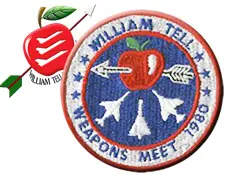
With the reorganization of air defense forces in 1979, TAC assumed sponsorship for William Tell. The first TAC-sponsored meet in 1980 included 10 teams from active duty F-4 and F-106 units, ANG F-4, F-106 and F-101 units, and a Canadian Forces CF-101 unit.
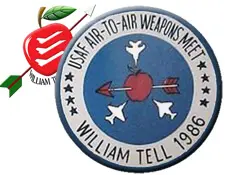
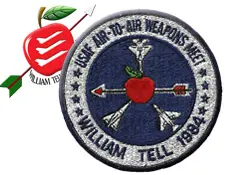
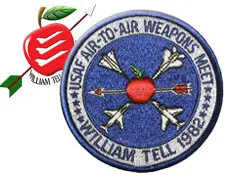
In 1982, Tactical Air Command officially changed the name of the meet to the USAF Air-to-Air Weapons Meet. That meet also marked the return of the Pacific Air Forces and the USAF in Europe to the competition, and the first appearance of the F-15 "Eagle". William Tell 1984 saw the introduction of the supersonic QF-100 full-scale drone as a William Tell target and was the first meet in which only full-scale drones were used as missile targets. In 1986, the CF-18 entered in the competition for the first time with the Canadian team, finishing second overall behind a F-15 Team from the USAF's Tactical Air Command.
During the 1988 meet a total of twelve teams from TAC, ANG, PACAF, USAFE, Alaskan Air Command and Canada participated in on of the most competitive meets ever.
The 1990 competition was canceled due to Operation Desert Shield/Storm and resumed in 1992, held by the newly formed Air Combat Command. Eight teams competed and the 18th Wing from Kadena AB, Japan, walked away with the top team award for the second time.
Hosted by Air Combat Command and the US Air Force Air Warfare Center, William Tell 94 gave the USAF's best fighter units the opportunity to compete in all aspects of air-to-air operations.
Beginning in 1996, Teams that attended the William tell Weapons Meet were to be assembled differently than the had been in the past. In previous Meets teams competed as units (Squadrons or Wings), in the 1996 each major Command, the Air Force Reserve, the Air National Guard, and a combined Canadian team would compete against each other for the right to be known as the best in the Air.
After an eight hiatus, the Air Combat Command announced it would host the next William Tell in the first weeks of November of 2004, meets 50th Anniversary. The 2004 edition of William Tell included massive changes to the format of the competition. Moving away from it's roots as a interceptor competition the 2004 meet will test the performance of F-15 aircrews from U.S. Air Force and Air National Guard units in the air dominance and air sovereignty missions. The 2004 meet still featured weapons loading, maintenance and weapons director competitions as it has in the past.
On Thursday October 14 the very last flight of the 2004 William Tell was mission that crowned the last Champion in the history of the contest, Pacific Air Forces team from Elmendorf's 19th Fighter Squadron of the 3rd Wing.
The Air Combat Command intended to continue the competition on a regular rotation, with the commands air to ground competition "Gunsmoke" to be held one year, William Tell the next, unfortunately this plan never took place. There are no plans at this time to continue the tradition of the William Tell Weapons Meet.
© F-106DeltaDart.com Founded 1998 Privacy | Terms of use | Site Map | Contact